


Standard Copper Tubing Dimensional Reference
Petersen Does Not Sell Copper Tubing
Select Mechanical or Inflatable Pipe Plugs based on the below tubing ID (Internal Diameter) and along with the pressure to be blocked
Copper pipes are commonly used in plumbing, HVAC, and industrial applications. They are classified by types (K, L, M, DWV) based on wall thickness and intended use. This guide provides a detailed size chart covering nominal pipe size (NPS), outside diameter (OD), inside diameter (ID), and wall thickness for different copper tubing types.
| COPPER PIPE I.D. & WALL THICKNESS CHART | |||||||||
| Nominal Pipe Size inches | O.D. | I.D. | Wall Thickness | ||||||
|---|---|---|---|---|---|---|---|---|---|
| Type | |||||||||
| K* | L** | M*** | DWV**** | K | L | M | DWV | ||
| 1/4 | 0.375 | 0.305 | 0.315 | - | - | 0.035 | 0.030 | - | - |
| 3/8 | 0.500 | 0.402 | 0.430 | 0.450 | - | 0.049 | 0.035 | 0.025 | - |
| 1/2 | 0.625 | 0.527 | 0.545 | 0.569 | - | 0.049 | 0.040 | 0.028 | - |
| 5/8 | 0.750 | 0.652 | 0.666 | - | - | 0.049 | 0.042 | - | - |
| 3/4 | 0.875 | 0.745 | 0.785 | 0.811 | - | 0.065 | 0.045 | 0.032 | - |
| 1 | 1.125 | 0.995 | 1.025 | 1.055 | - | 0.065 | 0.050 | 0.035 | - |
| 1-1/4 | 1.375 | 1.245 | 1.265 | 1.291 | 1.295 | 0.065 | 0.055 | 0.042 | 0.040 |
| 1-1/2 | 1.625 | 1.481 | 1.505 | 1.527 | 1.541 | 0.072 | 0.060 | 0.049 | 0.042 |
| 2 | 2.125 | 1.959 | 1.985 | 2.009 | 2.041 | 0.083 | 0.070 | 0.058 | 0.042 |
| 2-1/2 | 2.625 | 2.435 | 2.465 | 2.495 | - | 0.095 | 0.080 | 0.065 | - |
| 3 | 3.125 | 2.907 | 2.945 | 2.981 | 3.030 | 0.109 | 0.090 | 0.072 | 0.045 |
| 3.5 | 3.625 | 3.385 | 3.425 | 3.459 | - | .120 | .100 | .083 | - |
| 4 | 4.125 | 3.857 | 3.897 | 3.935 | 4.009 | .134 | .114 | .095 | .058 |
| 5 | 5.125 | 4.805 | 4.875 | 4.907 | 4.981 | .160 | .125 | .109 | .072 |
| 6 | 6.125 | 5.741 | 5.845 | 5.881 | 5.959 | .192 | .140 | .122 | .083 |
| 8 | 8.125 | 7.583 | 7.725 | 7.785 | - | .271 | .200 | .170 | - |
*K, thick walled, underground residential, commercial and industrial uses.
**L, medium walled, residential and commercial uses
***M, thin walled, above ground residential and light commercial uses.
****DWV, Drain/Waste/Vent, non-pressurized
The content in this website may be used but with no warranty or liability. These copper tubing sizes and dimensions are believed to be correct but should always be double checked with alternative sources. Strictly adhere to and follow all applicable national and local regulations and practices.
Pipe Plugs for Testing, Blocking, Bypassing, Line Stopping, and More
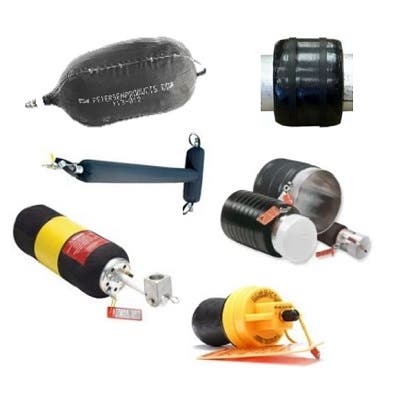
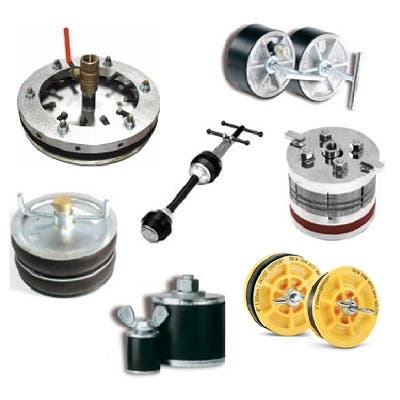
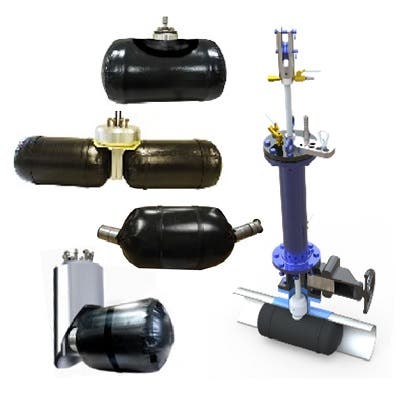
 Custom Manufacturing Solutions
 Drain Flushers & Sewer Cleaning Tools
  High Pressure Mechanical Pipe Plugs
  Hot Tap Machines & Equipment
  Inflatable Annular Seals, Bladders & Duct Plugs
  Inflatable Lifting Air Bags & Pipe Handlers
  Inflatable Packer Carriers
  Inflation Accessories & Pipeline Fittings
  Low Pressure Mechanical Pipe Plugs
  Multi-Flex® Chemical Resistant Inflatable Pipe Plugs
  PeteStop® Inflatable Line Stop Pipe Plugs
  PeteStop® Line Stop Systems, Components & Tools
  Pipe Plugs - Inflatable
  Pipe Plugs - Mechanical
  Pipeline Test Equipment
  Rubber Molded Inflatable Pipe Plugs
  Temperature and Pressure Test Plugs
  Tools for Contractors


Verified Phone Surveys with Customers